👋 Turn a Familiar Face, Profession, or Brand Personality Into Advertising People Remember
Most businesses already have a personality.
Sometimes it is the owner customers recognize when they walk through the door. Sometimes it is a Realtor whose face appears on every yard sign. It might be a chef known locally for a signature restaurant, a barber with a distinctive look, a dentist recognized throughout the neighborhood, or simply a brand whose colors and visual style are instantly familiar.
The challenge is taking that identity beyond a website, social post, business card, or storefront sign and turning it into something people notice in the physical world.
That is where character-based inflatables become especially interesting.
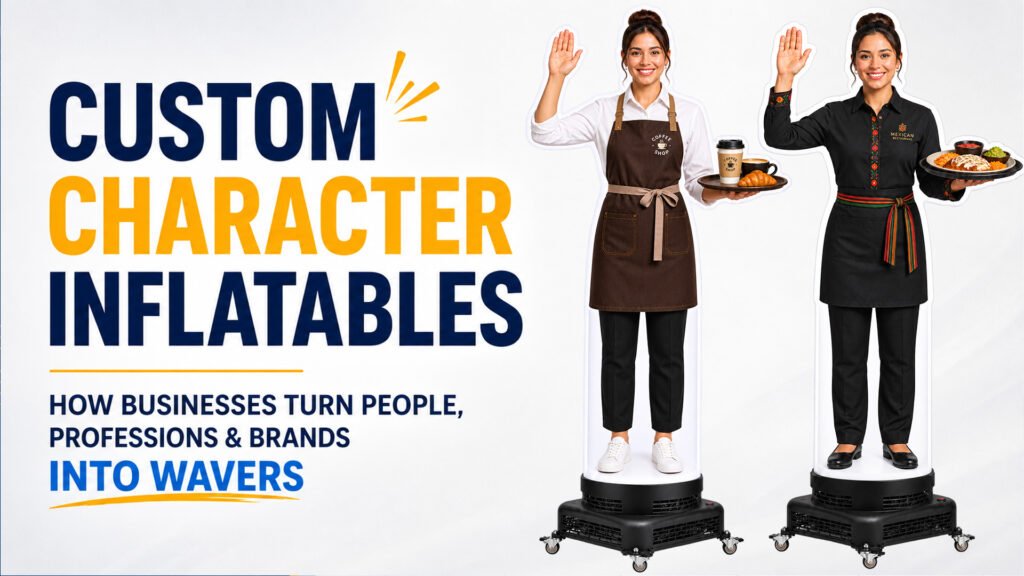
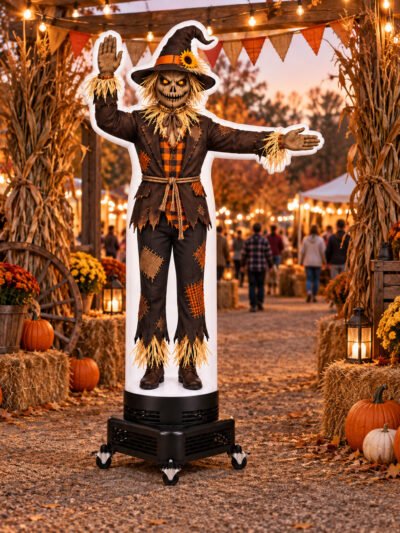
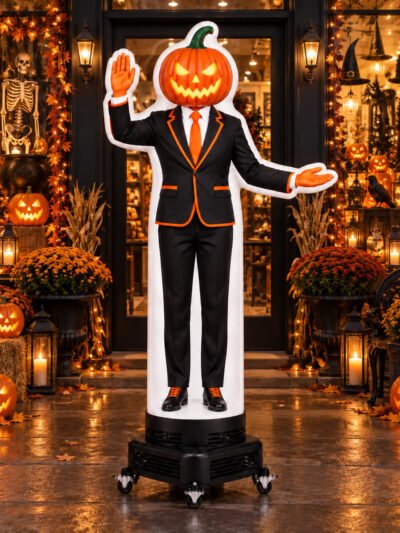
Rather than placing a generic moving figure outside a business, companies can develop an inflatable character around a real person, a profession, an employee type, a brand concept, or a completely original idea. Clothing, colors, facial appearance, accessories, logos, messages, and industry-specific details can all work together to make the character feel connected to the business it represents.
For companies looking for a distinctive promotional format, Custom Wavers make it possible to transform recognizable business identities into larger-than-life visual advertising.
This guide looks closely at how that process works, what can be personalized, which industries benefit most, and what makes a character effective once it moves from a digital mockup into the real world.
What Are Custom Character Inflatables?
Character-based inflatables are promotional displays shaped and designed to represent a person, profession, mascot, business concept, or recognizable role.
The idea goes well beyond placing a face on an ordinary inflatable.
A well-developed Custom Character Inflatable combines appearance, clothing, posture, accessories, branding, and movement so viewers can understand what the character represents almost immediately.
Consider a few examples.
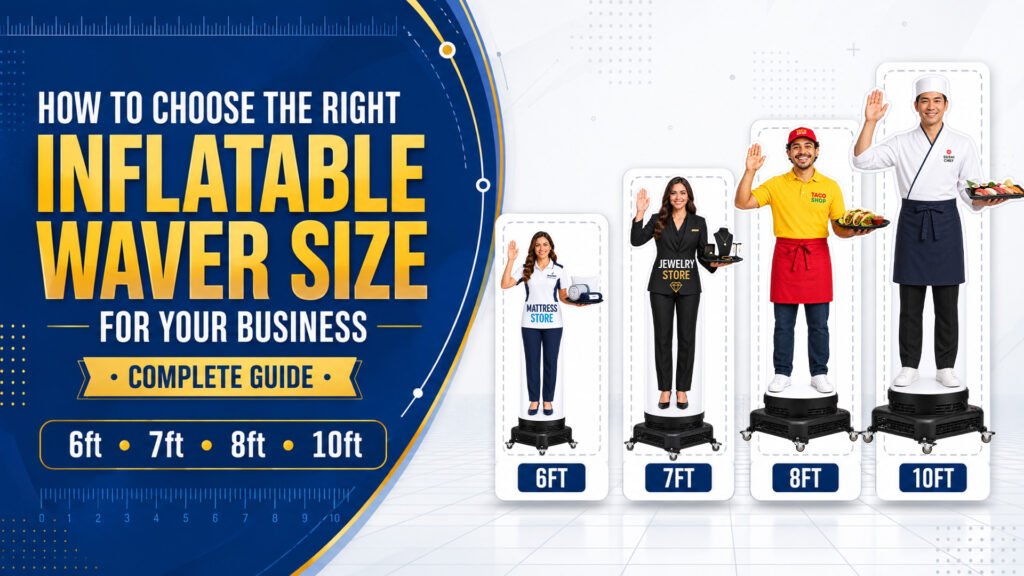
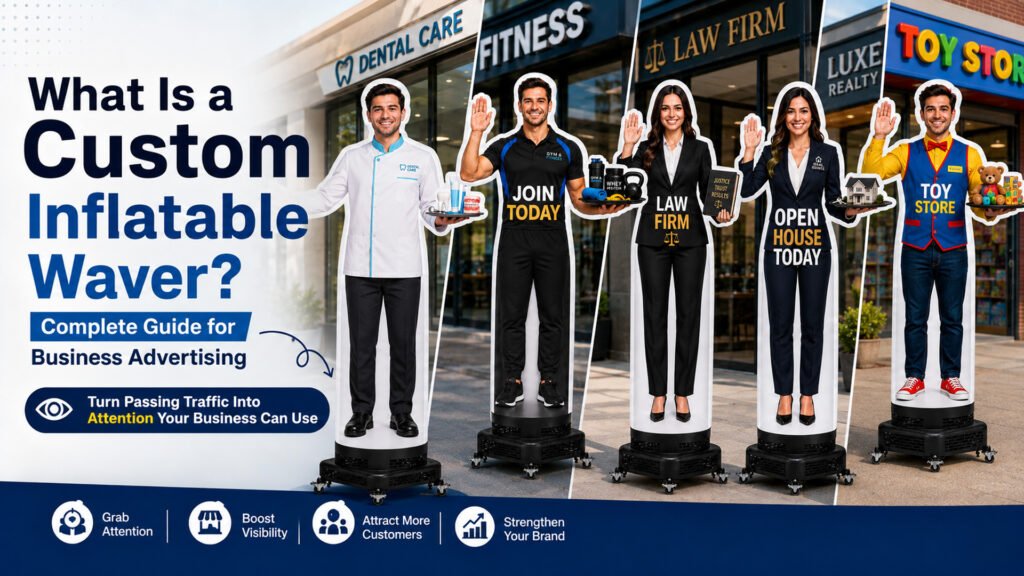
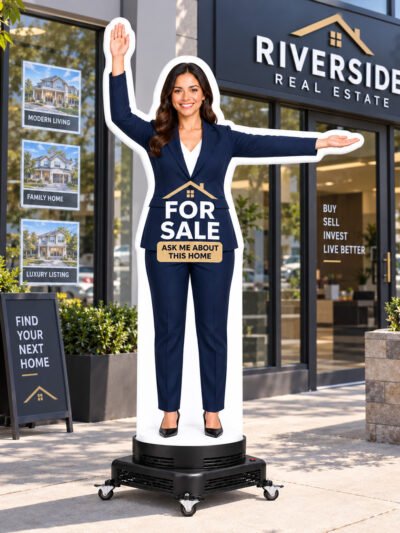
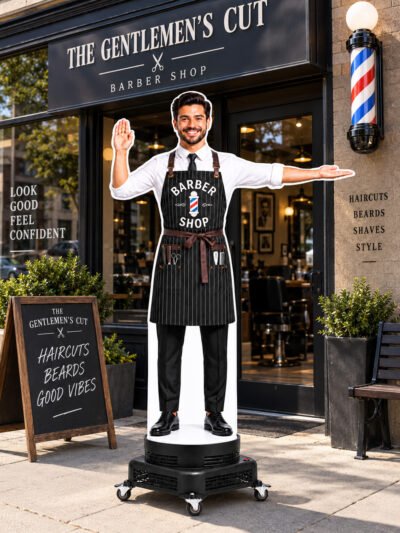
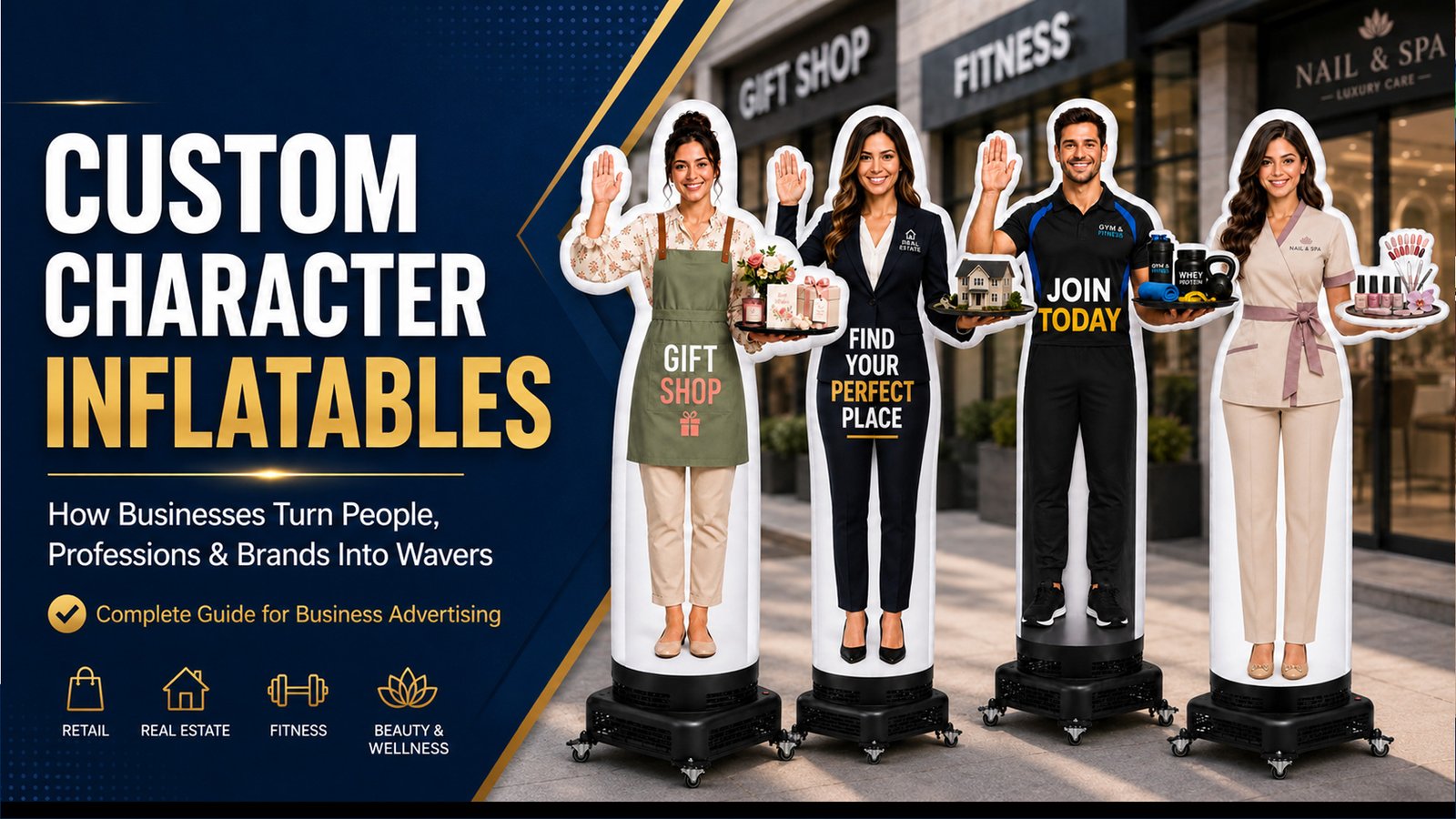
A Realtor character might wear a business suit and hold a miniature home. A chef could wear a traditional chef jacket and hat while carrying a serving tray. A barber might wear a professional barber uniform and hold grooming accessories. A retail character could carry shopping bags or merchandise relevant to the store.
Each one communicates a different message before the viewer reads a single word.
That is one of the greatest strengths of character advertising: the visual itself can explain the business.
Why Character-Based Advertising Feels More Personal
People naturally respond to faces and familiar human forms.
A traditional sign communicates information. A character can communicate personality.
That distinction matters when businesses compete for attention in busy commercial areas. A storefront may already have signs, window graphics, banners, parking-lot displays, and promotional posters. Adding another rectangle with text does not always create much visual contrast.
A human-shaped character changes the scene.
It provides height, movement, expression, recognizable clothing, and visual storytelling. When those elements are tied directly to the business, the display becomes more than decoration.
It becomes a physical extension of the brand.
A family passing a restaurant may notice a chef character before they notice the restaurant sign. A potential homebuyer may remember the Realtor character outside an open house. Someone driving past a barber shop could associate the distinctive barber figure with that specific location.
Good character advertising creates recognition before it asks for action.
Turning a Real Person Into an Inflatable Character
One of the most distinctive approaches is developing a character around an actual person.
This might be:
- a business owner;
- Realtor;
- salesperson;
- chef;
- barber;
- salon professional;
- doctor or dentist;
- company spokesperson;
- team member;
- local personality associated with the business.
The process usually begins with reference material.
Clear photographs can help establish important visual elements such as hairstyle, facial structure, clothing style, skin tone, profession, accessories, and overall presentation.
The goal is not to create a rigid photographic replica.
An inflatable character has its own proportions and physical construction requirements, so the real person must be interpreted in a way that works naturally as a large promotional display.
What matters most is preserving the recognizable characteristics that make the person identifiable.
Facial Appearance
The face often carries the strongest connection to the person being represented.
Key features may include:
- hairstyle;
- hair color;
- facial hair;
- general facial structure;
- smile;
- glasses;
- complexion;
- other recognizable visual traits.
The final character should look friendly and appropriate for public-facing business promotion.
Clothing
Clothing can reinforce both personality and profession.
A Realtor may want the character wearing the same style of suit used in professional marketing photographs. A barber could use the shop’s uniform. A restaurant owner might prefer chef clothing.
These choices help connect the character with the person’s real-world professional identity.
Accessories
Props can strengthen recognition even further.
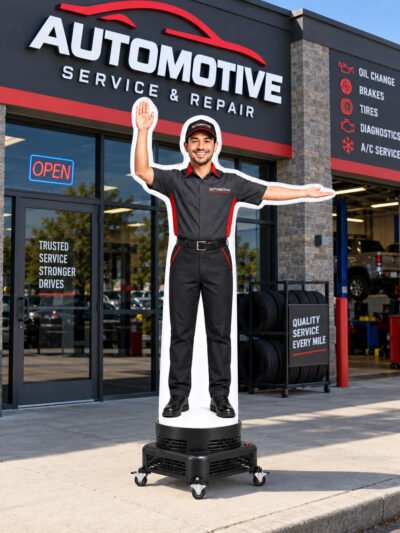
A Realtor holding a house, a dentist holding a tooth model, a mechanic carrying a tool, or a retail professional holding shopping bags gives viewers immediate context.
The best accessories are usually simple enough to understand from a distance.
Turning a Profession Into a Character
Not every business needs an inflatable based on a specific individual.
In many cases, representing the profession itself is more useful.
A profession-based character allows a business to create an instantly understandable advertising figure without tying the display to one particular employee.
This works especially well for businesses with multiple locations, changing staff, franchise environments, or broad customer audiences.
Realtor Characters
Real estate professionals can use character designs for:
- open houses;
- new listings;
- model homes;
- property developments;
- brokerage offices;
- property management;
- sales events.
A professional outfit, house prop, business colors, and concise promotional message can make the role obvious from a distance.
Restaurant and Chef Characters
Food businesses have enormous creative flexibility.
Characters can represent:
- chefs;
- pizza restaurants;
- burger restaurants;
- barbecue businesses;
- Mexican restaurants;
- taco shops;
- sushi restaurants;
- coffee shops;
- bakeries;
- food-service concepts.
Food-related props can make these characters particularly visual and memorable.
Barber and Beauty Characters
Barber shops, hair salons, spas, nail businesses, massage centers, and beauty professionals can develop characters that fit the atmosphere of the business.
A barber character may use grooming tools and a professional uniform, while a salon character may have a more polished fashion-oriented appearance.
Medical and Dental Characters
Doctors, dentists, nurses, clinics, orthodontic practices, and other healthcare businesses can use professional-looking characters designed to remain approachable without becoming childish.
The balance here is important: friendly enough to attract attention, professional enough to represent a healthcare environment.
Automotive Characters
Mechanics, technicians, car dealerships, oil-change businesses, tire shops, and auto service centers often rely heavily on roadside visibility.
Automotive characters can incorporate:
- technician uniforms;
- tools;
- automotive colors;
- service-related messages;
- dealership branding.
Retail Characters
Retail businesses can adapt characters around the type of products they sell.
Examples include:
- clothing stores;
- gift shops;
- jewelry stores;
- toy stores;
- convenience stores;
- specialty retailers;
- mobile phone stores;
- beauty supply stores.
A character holding recognizable merchandise can often communicate the store category instantly.
Turning Brand Identity Into the Character
A strong inflatable should not feel disconnected from the business.
Brand integration is what turns an interesting character into purposeful advertising.
This is where Inflatable Advertising becomes far more strategic than simply placing a moving object outside a storefront.
Several elements can help connect the design to the company.
Brand Colors
A character can incorporate colors already used in:
- logos;
- uniforms;
- storefront signage;
- websites;
- vehicles;
- printed marketing materials.
Consistent colors create familiarity.
If customers repeatedly see the same visual identity online, on signage, and on a character outside the location, recognition becomes easier.
Logos
A company logo can sometimes be incorporated onto:
- shirts;
- jackets;
- aprons;
- hats;
- uniforms;
- props;
- other suitable areas.
Logo placement should remain clear without overwhelming the design.
Business Name
The business name can be incorporated where appropriate, particularly when the character is being used to introduce or reinforce a local brand.
Promotional Messaging
Short promotional text can make the purpose of the display clearer.
Examples may include:
- OPEN HOUSE;
- NOW OPEN;
- WELCOME;
- GRAND OPENING;
- SALE;
- ASK ME ABOUT THIS HOME.
The shorter and clearer the message, the more likely it is to be understood quickly.
What Can Businesses Personalize?
Customization can go considerably deeper than many first-time buyers expect.
Depending on the character and production requirements, businesses may personalize a combination of the following elements.
Face and Appearance
Reference photographs or selected character styles can guide the appearance.
Gender and Profession
Characters can be developed around the role most relevant to the business.
Hairstyle
Hair length, style, color, and general appearance can help establish personality.
Clothing
Outfits can range from professional suits to uniforms, aprons, medical coats, chef jackets, mechanic clothing, salon attire, or industry-specific apparel.
Colors
Brand colors can be carried through the clothing, accessories, graphics, and visual accents.
Logos and Business Information
Approved company branding can be incorporated where it remains visually effective.
Promotional Text
Names, campaign messages, property information, or simple calls to action may be added depending on the design.
Props
Profession-specific props are often among the strongest visual signals.
Examples include:
- miniature houses;
- serving trays;
- shopping bags;
- tools;
- dental models;
- beauty products;
- retail merchandise;
- coffee cups;
- food items.
The important principle is restraint.
Adding every possible detail rarely improves the design. A few strong elements are usually more effective than a cluttered character covered in text and accessories.
Real-Person Characters vs Profession-Based Characters
Both approaches can be effective, but they serve slightly different goals.
Choose a Real-Person Character When:
- the owner is central to the business identity;
- customers already recognize the person;
- personal branding drives sales;
- the individual appears prominently in other marketing;
- the business wants a highly personalized promotional asset.
This is especially relevant to Realtors, independent business owners, local professionals, and customer-facing personalities.
Choose a Profession-Based Character When:
- the profession matters more than the individual;
- the business has multiple employees;
- the character may be used across multiple locations;
- long-term flexibility is important;
- the business wants customers to recognize the service instantly.
A restaurant, for example, may benefit more from a chef character than from creating an inflatable of one specific staff member.
Neither approach is automatically better.
The right choice depends on what customers already associate with the business.
From an Idea to an Inflatable-Friendly Character
A character may look great as an illustration but still need careful adaptation before it can become a physical inflatable.
This is because a three-dimensional promotional structure behaves differently from flat artwork.
Proportions must work when inflated. Clothing details must remain readable. Arms and props need to be positioned appropriately. Important branding cannot disappear into folds or sit in areas that are difficult to see.
The design process therefore balances creativity with practical visibility.
A typical project might begin in one of three ways:
Starting With an Existing Character
A customer chooses an existing profession or business character and requests personalized changes.
Starting With a Real Person
Photographs and professional details are used as reference for the concept.
Starting From a New Idea
The customer describes the profession, appearance, branding, clothing, message, props, and other requirements needed for a completely new concept.
Whichever route is used, the objective remains the same: create a character that works visually once it becomes a moving inflatable rather than simply looking attractive on a computer screen.
The Mockup and Design Approval Stage
The mockup stage is one of the most important parts of ordering a personalized promotional product.
Before printing begins, customers should have an opportunity to see how their requested details come together.
The review should include:
- character appearance;
- clothing;
- colors;
- logos;
- spelling;
- names;
- telephone numbers where included;
- website addresses where included;
- promotional messages;
- props;
- other custom details.
If something needs adjustment, this is the stage where it should be corrected.
Only when the customer is comfortable with the final design should the order move forward.
This approval-based approach provides clarity on both sides. The customer understands what will be produced, while the production team has a clearly approved design to follow.
Why Final Approval Deserves Careful Attention
It is easy to glance at a mockup and focus only on whether the character looks attractive.
A better approach is to review it systematically.
Check Every Word
Names, websites, telephone numbers, slogans, and promotional messages should be checked letter by letter.
Review the Logo
Confirm that the correct logo version has been supplied and positioned appropriately.
Look at Colors
Digital screens can vary, but the overall brand color direction should still be checked carefully.
Examine Clothing and Appearance
Make sure the outfit reflects the intended profession and business style.
Review Props
Confirm that accessories make sense and do not distract from the main message.
Consider the Design From a Distance
Ask a simple question:
If someone saw this for only a few seconds from the other side of a parking lot, would they understand what it represents?
That perspective can reveal unnecessary details that may look good up close but add little promotional value.
What Happens After the Design Is Approved?
Once the customer gives final approval, the project moves from design into production.
At that point, the approved visual becomes the production reference.
Because printing creates the customized physical product, design changes can no longer be made after printing has started.
This makes the earlier review stage especially important.
Production can involve several stages, including:
- preparing approved artwork;
- printing the required graphics;
- preparing and assembling material components;
- constructing the inflatable form;
- reviewing important visual details;
- checking the finished character when inflated;
- preparing the completed product for dispatch.
For custom promotional products, this sequence helps maintain continuity between what the customer approved and what ultimately arrives.
Seeing the Finished Character Before Shipping
A finished inflatable looks different from a flat digital mockup.
Once inflated, its size, proportions, movement, face, outfit, props, and overall presence become much easier to appreciate.
Showing the completed product before shipment gives the customer an additional opportunity to see the result in its physical form.
A finished-product video can demonstrate:
- overall appearance;
- inflation;
- character proportions;
- waving movement;
- visible branding;
- final presentation.
The purpose is not to reopen approved design changes after production. Instead, it gives customers visibility into the finished item before it is packed and shipped.
Industries That Can Use Character-Based Promotion
The concept can be adapted to far more businesses than the obvious storefront categories.
Businesses using or potentially benefiting from Custom Inflatables include:
Real Estate
Realtors, brokerages, property managers, developers, homebuilders, and open-house promotions.
Food and Hospitality
Restaurants, pizza shops, burger restaurants, barbecue businesses, taco shops, sushi restaurants, coffee shops, bakeries, cafés, and food retailers.
Beauty and Personal Care
Barbers, hair salons, spas, massage businesses, nail salons, beauty stores, and grooming businesses.
Healthcare
Dentists, doctors, medical clinics, orthodontic practices, and other customer-facing health businesses.
Automotive
Car dealerships, auto repair shops, mechanics, tire shops, oil-change centers, detailing businesses, and service centers.
Retail
Clothing stores, gift shops, jewelry stores, toy stores, convenience stores, mobile stores, specialty shops, and other retailers.
Fitness
Gyms, fitness centers, personal-training businesses, and sports-related promotions.
Professional Services
Law firms, tax offices, accounting businesses, construction companies, home-service providers, and other local professionals.
Family and Pet Services
Preschools, childcare businesses, pet groomers, pet stores, and family-oriented local services.
The profession may change, but the underlying advertising principle remains the same: create a visual character that customers can understand quickly.
Using Character Inflatables for Different Campaigns
A business does not necessarily need to use the same character in the same way throughout the year.
The display can support multiple promotional situations.
Storefront Visibility
Regular placement can make a location more noticeable to nearby traffic.
Grand Openings
New businesses need to communicate immediately that something is happening at the location.
A moving character can support balloons, banners, signs, music, and other launch-day promotional activity.
Open Houses
Realtors can use recognizable characters to help buyers identify a property event.
Sales and Promotions
A character can draw attention toward temporary campaigns and seasonal offers.
Events
Businesses participating in suitable outdoor promotional events can use the character as a recognizable visual landmark.
New Location Promotions
When a business opens an additional location, familiar branded imagery can help connect the new storefront to the established brand.
Choosing a Character That Fits Your Audience
Being noticeable is important.
Being relevant is more important.
The visual style should reflect the audience the business wants to reach.
Professional Businesses
Real estate companies, law firms, clinics, and professional services usually benefit from polished clothing and controlled visual details.
Family-Oriented Businesses
Toy stores, preschools, restaurants, and family entertainment businesses may have more flexibility to use playful expressions and brighter visual elements.
Premium Retail
Jewelry stores, boutiques, spas, and high-end services may need a more refined character with restrained colors and cleaner styling.
Automotive Businesses
Bolder uniforms, tools, and strong contrasting details can work well in an environment where customers are often viewing advertising from the road.
The character should feel like it belongs outside that particular business.
If it could be placed outside almost any storefront without changing anything, the design probably is not personalized enough.
Why Character Advertising Can Be More Memorable
People remember distinctive visual experiences.
A generic sale sign may communicate a discount effectively, but it rarely creates a lasting identity on its own.
A character can.
Imagine a local neighborhood where one Realtor consistently uses a recognizable professional character at open houses. Over time, people may begin associating that figure with the Realtor even before they read the name.
The same idea can work for a chef character outside a restaurant or a barber character outside a shop.
This is where Advertising Inflatables become particularly interesting from a branding perspective.
They can operate as both promotional displays and recognizable visual assets.
That combination gives businesses the opportunity to build familiarity rather than simply generate a momentary burst of attention.
What Makes a Strong Character Design?
An effective character does not need dozens of details.
It needs the right details.
Clear Profession
People should understand the role quickly.
Recognizable Silhouette
The overall form should remain easy to interpret at a distance.
Strong Clothing Choices
Uniforms and professional clothing often communicate more effectively than large blocks of explanatory text.
Appropriate Props
One well-chosen prop can make the business category obvious.
Visible Branding
Branding should be placed where it can actually be seen.
Simple Messaging
Short promotional text is generally more useful than lengthy copy.
Friendly Presentation
For most customer-facing businesses, the character should feel welcoming rather than aggressive or overly exaggerated.
Balanced Customization
The strongest designs feel personalized without becoming visually overloaded.
How Character Wavers Fit Into a Larger Marketing Strategy
No single marketing tool should carry the entire burden of promoting a business.
Character inflatables work best when they reinforce other activity.
A Realtor might combine a character with:
- property signs;
- social media promotion;
- online listing advertising;
- directional signage;
- open-house marketing.
A restaurant might combine one with:
- storefront signage;
- online delivery promotions;
- social media;
- local search marketing;
- grand-opening advertising.
A retail business may combine the display with:
- window graphics;
- seasonal promotions;
- online advertising;
- email campaigns;
- sidewalk signage.
The character becomes the highly visible physical component of a wider campaign.
When customers encounter the same business identity across several channels, familiarity builds faster.
Frequently Asked Questions
Can you create an inflatable character from a photograph?
A customer can provide photographs as reference material when requesting a personalized character. Clear images help communicate facial appearance, hairstyle, clothing, and other recognizable features.
Can my character wear my business uniform?
Yes, clothing can be developed around the profession or business style, including suitable uniforms and branded apparel where appropriate.
Can I add my company logo?
Approved business logos can be incorporated into suitable areas of the character design.
Can I add promotional text?
Depending on the character, short business or promotional messages can be incorporated where they remain visible and easy to understand.
Can I customize the hair, clothing, colors, and accessories?
Those details can form part of the design requirements. The exact possibilities depend on the character concept and production considerations.
Do I get to review the design before printing?
Yes. Customers should review the customization mockup and approve the final design before it moves into printing.
Can I request changes during the mockup stage?
Yes. The review stage is specifically where requested adjustments should be discussed and finalized.
Can I make changes once printing has started?
No. Once the approved artwork has entered printing and production, the design is considered final.
Can I create characters for more than one profession?
Yes. Businesses with multiple departments, professions, locations, or campaigns can develop different character concepts based on their marketing needs.
Final Thoughts: Give Your Business a Face People Can Recognize
A strong business identity is easier to remember when customers can associate it with something visual.
For some businesses, that visual identity is the owner. For others, it is the profession, uniform, mascot, or recognizable style of the brand.
Character inflatables provide a way to take that identity out of the digital world and place it directly where customers can see it.
The most effective designs do not depend solely on being tall or moving.
They work because the character makes sense.
A chef belongs outside a restaurant. A Realtor belongs at an open house. A barber belongs outside a grooming business. A retail character carrying merchandise belongs at a store.
When facial appearance, profession, clothing, branding, movement, and location all reinforce the same message, the character becomes far more than a promotional novelty.
It becomes another recognizable part of the business.